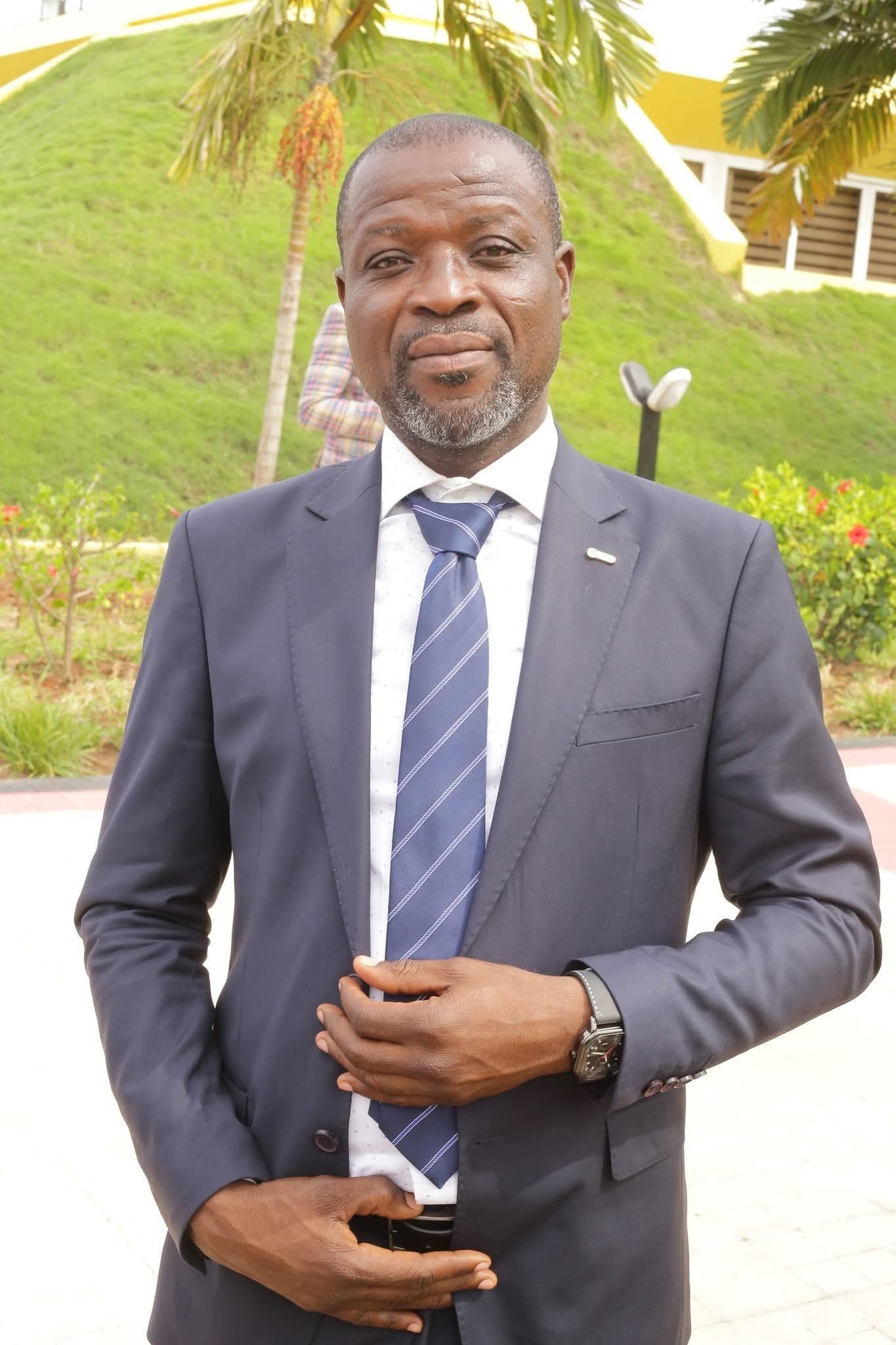
As a Presidential Aide at the Ministry of State in charge of Special Initiatives, I wish to formally welcome our new Minister, Dr. Abdul-Rashid Hasan Pelpuo, to the Ministry.
Dr. Pelpuo is a seasoned public servant, legislator and administrator, well known for his strategic innovations, commitment to effective governance and ability to drive policy implementation.
His reassignment from the Ministry of Labour, Jobs and Employment to the Ministry of State in charge of Special Initiatives has, however, generated considerable debate, particularly in the Upper West Region.
But the question is: Is the reassignment of Dr. Pelpuo a demotion or an elevation?
I have read concerns attributed to a group calling itself the “Concerned Youth and Elders of Wa Central and the Upper West Region,” which expressed disappointment over the reassignment of the Member of Parliament for Wa Central.
The group reportedly argued that moving their only Cabinet Minister from the Ministry of Labour, Jobs and Employment, a ministry directly responsible for addressing unemployment and youth joblessness to a non-Cabinet ministry at the Presidency amounts to a demotion.
I have also read comments attributed to a former Assembly Member of the Dandafuro Electoral Area in Wa, Mr. Soorinye Francis, advocating that the youth of Wa should resort to burning tyres in protest against the reshuffle.
I strongly disagree with this interpretation of the President’s decision.
First, let me commend Dr. Rashid Pelpuo himself for the maturity and statesmanship he has demonstrated following his reassignment.
In a statement after the reshuffle, he wrote;
“I’m overwhelmed with calls all over the country and especially from the Upper West Region over my reshuffle. Thanks to all.”
He further stated:
“I appreciate the new position and want to thank His Excellency the President for keeping me onboard to help push our reset agenda to a logical and successful conclusion. Service to the nation is my core mission to get what we promise the nation a paramount concern.”
Those words are important.
Rather than seeing his reassignment as a loss of status, Dr. Pelpuo has chosen to see it as another opportunity to serve Ghana and help President John Dramani Mahama deliver on the promises of the Resetting Ghana Agenda.
So, Is It Really a Demotion?
To describe Dr. Pelpuo’s appointment to the Ministry of State in charge of Special Initiatives simply as a “demotion” is, in my view, to misunderstand the structure and strategic priorities of the Mahama administration.
The Ministry of Special Initiatives occupies a strategic position within the administration’s development architecture. It is closely connected to the Presidency and is expected to play a critical role in coordinating and driving priority initiatives of government.
The ministry is therefore not a dumping ground for ministers who have lost favour or relevance.
On the contrary, it is an office that requires a minister capable of translating presidential priorities into concrete programmes and measurable results.The ministry sits at the intersection of policy, coordination, implementation and presidential priorities.
Its responsibilities touch on flagship government interventions, strategic national projects, infrastructure expansion and other priority initiatives associated with the President’s development agenda.This is precisely why the personality chosen to lead such a ministry matters.
The Constitutional Question
There is also a need to put the Cabinet argument into proper perspective.
Article 76 of the 1992 Constitution provides for a Cabinet consisting of the President, Vice-President and between ten and nineteen Ministers of State. The Constitution gives the President the authority to determine which ministers constitute Cabinet.
Therefore, the mere fact that a minister is not a Cabinet Minister does not automatically mean that the minister is politically irrelevant, ineffective or has been demoted.
Government is much more complex than simply measuring a minister’s importance by whether his or her name appears on the Cabinet list. A minister serving directly within the Presidency can have enormous responsibility and influence depending on the portfolio assigned by the President.
Indeed, the former minister who held the Special Initiatives portfolio reportedly participated in Cabinet meetings as an invitee when matters relating to his responsibilities were considered.
This demonstrates that the office can carry significant responsibilities and direct engagement with the highest levels of government.
A Vote of No Confidence?
I therefore see Dr. Pelpuo’s reassignment differently.
President Mahama could have simply allowed him to leave government altogether.Instead, he has retained him and entrusted him with a portfolio that is closely connected to the implementation of the administration’s strategic priorities.
That, to me, is significant.
To head the Ministry of State in charge of Special Initiatives requires someone with administrative experience, political maturity, strategic thinking and, importantly, the confidence of the President.
Dr. Pelpuo brings years of parliamentary and governmental experience to the position.
His reassignment should therefore not be viewed through the narrow lens of whether he has moved from a Cabinet position to a non-Cabinet one.
The more important question is what responsibility has the President entrusted to him?And that responsibility is potentially enormous.
Upper West Region Should Look beyond Titles
I understand why some people in the Upper West Region may feel disappointed. Dr. Pelpuo has been a strong voice for his constituents and has occupied a nationally significant portfolio.
But political leadership should not be reduced to titles.What matters ultimately is impact, influence and results.
If Dr. Pelpuo can use his new position to help secure the successful implementation of major government initiatives, projects and interventions, his constituents and the people of the Upper West Region may ultimately benefit far more than they would from simply having a Cabinet title.
This is why I believe calls for burning tyres and creating disorder over a ministerial reassignment are unnecessary and unfortunate.
The relationship between President John Dramani Mahama and Hon. Dr. Abdul-Rashid Hasan Pelpuo
The relationship between President John Dramani Mahama and Hon. Dr. Abdul-Rashid Hasan Pelpuo did not begin now. It dates back to 2006, when both men began working together within the political space of the NDC and later as parliamentary colleagues when Hon Rashid Pelpuo entered parliament in 2005.
Over the years, Dr. Pelpuo has remained a trusted and experienced member of the Mahama family. This long-standing relationship is important when considering his latest reassignment.
President Mahama knows Dr. Pelpuo’s capabilities, his strengths and his capacity to deliver. The decision to place him in charge of the Ministry of State in charge of Special Initiatives should therefore not be viewed simply as a movement from one ministry to another.
It should also be understood in the context of trust, experience and confidence.
President Mahama has entrusted Dr. Pelpuo with responsibilities that, for obvious reasons, I cannot publicly disclose. But those of us who have observed their relationship over the years know that the President’s confidence in Dr. Pelpuo goes beyond what can be captured by a ministerial title.
When a President entrusts a long-serving political ally and experienced legislator with a portfolio located at the centre of his administration’s strategic initiatives, it is difficult to describe that as sidelining.
I still remember August 2008, when President John Dramani Mahama invited Dr. Rashid Pelpuo to lead a delegation from Bole to attend the funeral of the Chief of Bouna in neighbouring Côte d’Ivoire.
I was part of that delegation.
The journey itself was not an easy one. We had to cross the Black Volta by boat at Chache, the border community between Ghana and Côte d’Ivoire.
Dr. Pelpuo did not hesitate or complain about the difficulties involved.He simply understood the responsibility entrusted to him and led the delegation.
That experience remains memorable to me because it demonstrated something about Dr. Pelpuo that goes beyond politics and ministerial appointments, a willingness to serve, to travel and to undertake difficult assignments when duty calls.
A New Chpater
Dr. Pelpuo’s own response to the reshuffle should be the guide.
He has chosen service over title, responsibility over position and the national interest over political sentiment.
His statement that “service to the nation is my core mission” captures what public service should be about.
So, is Dr. Abdul-Rashid Hasan Pelpuo’s reassignment a demotion?
I don’t think so.
I see it as a strategic redeployment of an experienced minister to a position at the heart of the President’s development and implementation agenda.
It is a new responsibility, a new challenge and, potentially, an even greater opportunity to serve.
Welcome to the Ministry of State in charge of Special Initiatives, Hon. Dr. Abdul-Rashid Hasan Pelpuo.
The task ahead is enormous. The expectations are high. And the opportunity to make a difference is even greater.
Mahama Haruna (Presidential Staffer)