
By: Hafiz Timbile Adams
The AngloGold Ashanti Malaria Control (AGAMAL) has renewed its call on residents of the Upper West Region to support its Indoor Residual Spraying (IRS) programme, insisting that the intervention remains one of the most effective tools in the fight against malaria.
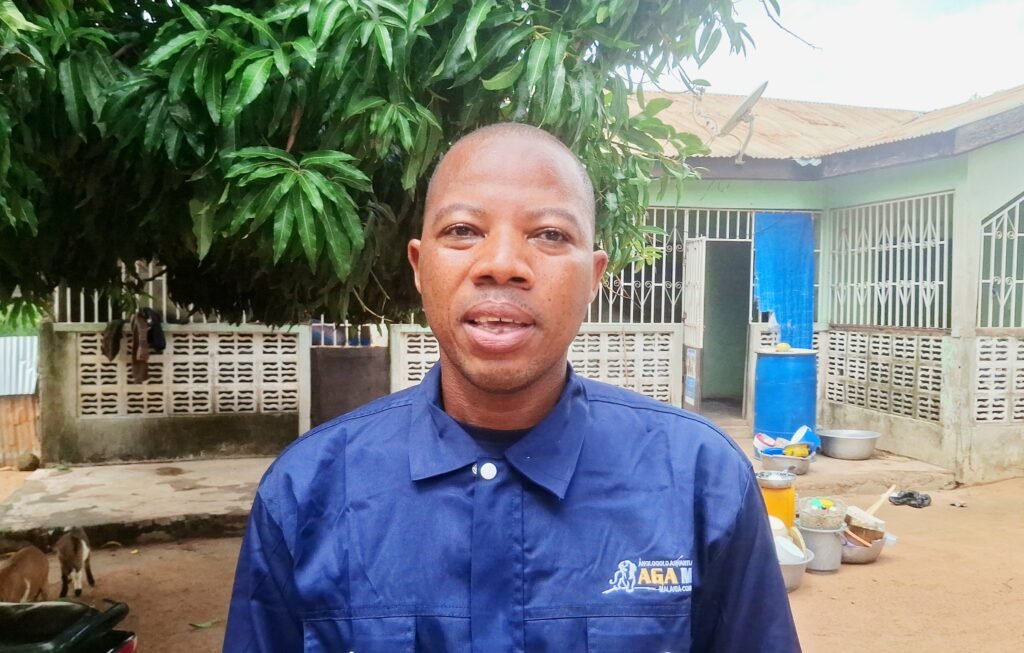
According to the Wa Municipal Manager of AGAMAL, Albert Donzagla, the programme has played a significant role in reducing malaria prevalence in the region over the past decade.
Speaking in an interview on the sideline of a monitoring exercise, Mr. Donzagla said AGAMAL began implementing IRS in the Upper West Region in 2012 when malaria prevalence stood at approximately 52%. Through sustained spraying campaigns and collaboration with the Ghana Health Service and other partners, he said the figure has dropped to about 12%.
“When we were starting, Malaria cases by then was around 52 percent. But with our effort, together with the effort of Ghana Health Service and other NGOs, it has now come down to somewhere 12 percent,” he stated.
He explained that “Our work is to visit households, educate residents, spray rooms and ensure that malaria cases continue to decline in the Upper West Region and Ghana as a whole.”
Effectiveness of IRS
Responding to concerns from some residents who question the effectiveness of the insecticide used in the spraying exercise, Mr. Donzagla stressed that the programme is backed by scientific research and international standards.
He explained that the insecticide currently being used, known as Fludolephine, has undergone extensive testing for more than a decade and is approved under a programme funded by the Global Fund.
“The insecticide is a slow-killer type. Mosquitoes that land on treated walls pick up a lethal dose and may not die instantly, but they die within a short period, usually within 24 hours,” he said.
According to him, the primary objective of the programme is not necessarily to eliminate mosquitoes altogether but to stop malaria transmission.
“Our focus is reducing malaria, not simply reducing mosquito populations. Mosquitoes may still exist, but if they cannot transmit malaria, then we are achieving our goal,” he noted.
Mr. Donzagla also disclosed that the insecticide is effective against other household pests, including cockroaches and wall geckos, a benefit that some residents have come to appreciate.
Concerns About Odour and Wall Stains
One of the common complaints from residents in previous years was that the spraying left unpleasant odours and stains on walls.
However, Mr. Donzagla said AGAMAL had responded to those concerns by adopting improved insecticides developed through further research.
“Today, when we spray a room and leave, many people cannot even tell that spraying has taken place because there is no visible staining and virtually no smell,” he explained.
He added that some residents mistakenly believe mosquitoes appear in larger numbers immediately after spraying because the insects become more active after coming into contact with the insecticide.
“The mosquitoes were already in the room. Once they pick up the poison, they begin to struggle and fly around before dying. Within a few days, the mosquito nuisance significantly reduces,” he said.
Integrated Approach Needed
While highlighting the importance of IRS, Mr. Donzagla cautioned that spraying alone cannot eliminate malaria.
He encouraged residents to complement the intervention with other preventive measures, including sleeping under insecticide-treated nets, screening windows, taking preventive medications distributed by health authorities, and reducing exposure to mosquito bites.
“If we combine all these interventions, we can significantly reduce malaria and move closer to elimination,” he stated.
He revealed that data from the Ghana Health Service indicate that the Wa Municipality is close to eliminating malaria, a milestone he believes can be achieved with greater community participation.
Safety Measures Prioritised
Addressing concerns about safety, particularly in homes where food is prepared and families live, the AGAMAL manager assured residents that strict safety protocols guide every spraying exercise.
He said AGAMAL operates under three key safety principles: protecting household members, protecting spray operators and protecting the environment.
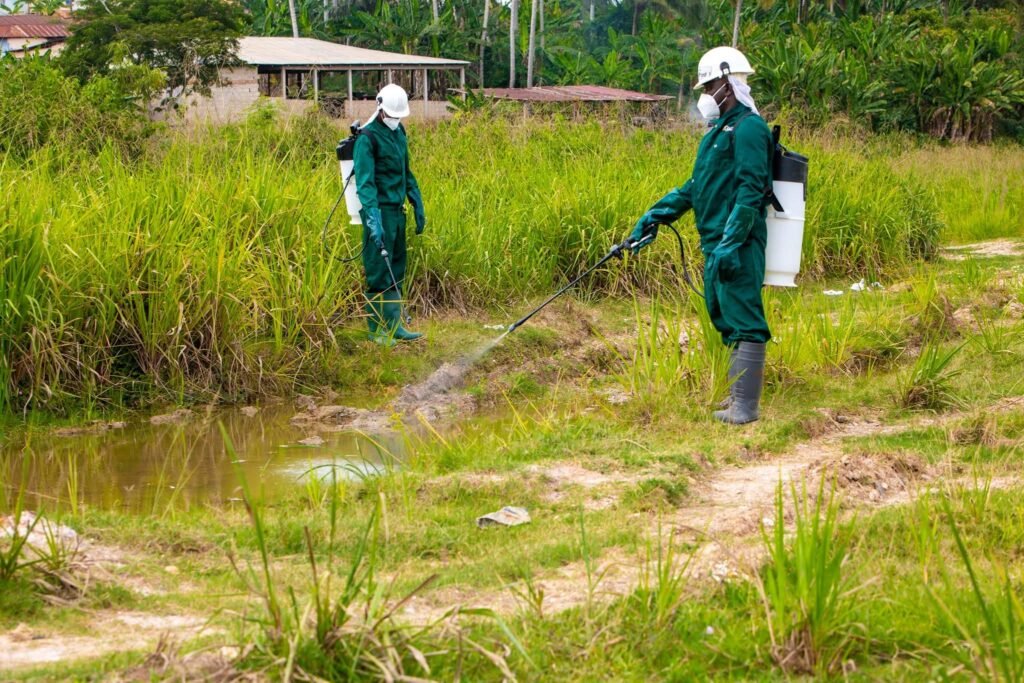
Before spraying begins, residents are educated on safety procedures and advised to gather household items at the centre of the room, where they are covered before spraying takes place. Occupants are then asked to remain outside for about two hours until the insecticide dries.
“We provide all the necessary instructions to ensure that household members remain safe throughout the process,” he said.
Residents are also advised to properly dispose of dead insects by burying them rather than throwing them outside where they could be consumed by domestic animals.
Commitment to Environmental Protection
Mr. Donzagla further highlighted AGAMAL’s environmental safeguards, noting that all insecticide disposal and equipment cleaning are carried out at specially designated soak pits approved by environmental authorities.
The soak pits use layers of sawdust, charcoal and rocks to absorb and neutralise insecticide residues, preventing contamination of the environment.
“We do not allow insecticides to be discharged directly onto the ground. Protecting the environment is a critical part of our work because environmental safety ultimately protects human life,” he explained.
Mr. Donzagla concluded by urging residents across the Upper West Region to embrace the spraying programme and contribute to efforts aimed at eliminating malaria.
He noted that malaria continues to impose financial, social and health burdens on families through medical costs, lost productivity and the pain associated with illness.
“This intervention has come to save us. If we all accept it and work together, we can significantly reduce malaria and ultimately eliminate it from our communities,” he appealed.